On 11 March 2026, employees at one of the world’s largest medical device manufacturers switched on their computers and found blank screens. An attacker had obtained an administrator account, reached the company’s fleet management console, and triggered a remote wipe. No ransomware, no malware dropped: a legitimate command, run by a legitimate tool, with the rights it needed.
And yet the detail that matters for us lies elsewhere: no medical device was affected. The company confirmed it. The products kept working. What went down were workstations, employee phones, and — for longer — the supply, ordering and shipping systems.
That is precisely why the episode deserves your attention. It marks out the blind spot your cybersecurity frameworks do not naturally cover.
What is confirmed, and what is not
A word on method before going further, because it conditions everything else: in the days that followed, spectacular figures circulated — hundreds of thousands of devices, petabytes of data destroyed, tens of terabytes exfiltrated. Those figures come from the attacking group’s claims, not from the manufacturer.
What the company confirmed is soberer: a global disruption to its network, tens of thousands of employee endpoints wiped, no malware deployed, and logistics systems offline. The stolen data the attacker claimed was never substantiated.
This distinction is not pedantry. If you write an impact assessment or a monitoring note repeating figures from an attacker’s communiqué, you are filing propaganda into your quality system. A group that has just run an operation has every interest in inflating it: the source of a data point is part of the data point.
The control plane, the frameworks’ blind spot
Open section 524B, IEC 81001-5-1, or requirements 17.2 and 17.4 of MDR Annex I. They all point at the same thing: the device. Its software, its interfaces, its update channel, its third-party components. That is legitimate — it is the device that touches the patient.
But what was compromised at Stryker is not a device. It is the control plane: the identity-plus-fleet-management layer that administers the company’s IT estate. A privileged account, a console able to act on tens of thousands of endpoints in a single gesture, and no friction between intent and execution.
For a medical device manufacturer, that control plane is no mere IT commodity. It is what signs and pushes your updates. It hosts your design files, your quality records, your keys. It administers the machines your developers commit embedded code from.
An attacker who controls the chain that pushes your patches does not need to attack your devices. They wait for the next update.
That is the path linking a purely IT incident to patient risk. It goes through none of your product’s interfaces.
The FDA already asks for this threat model
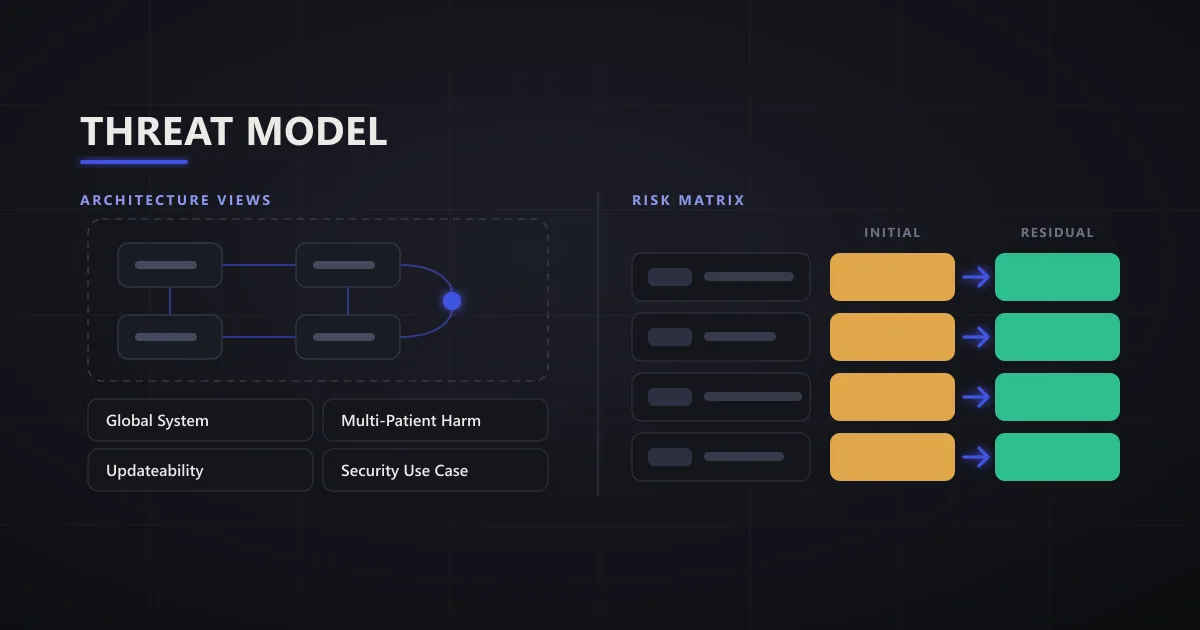
Here is the point most teams miss, and it is written plainly in the 2023 premarket guidance. The expected threat model must not stop at product architecture: it must capture the risks introduced through the supply chain, manufacturing, deployment, interoperation with other devices, maintenance and update activities, and decommissioning.
The guidance even says why: these are precisely the risks a traditional safety risk assessment tends to overlook.
In other words, a scenario like “a compromised administrator triggers a mass action from the console managing our development and deployment environments” already falls inside the required scope. This is not an over-zealous reading of the framework, it is the framework. In the files I review, that dimension is nevertheless almost always missing: the threat model stops at the product boundary, and the risk matrix carries no line about the processes that build and maintain it.
IEC 81001-5-1 points the same way by covering the development environment, and ISO 13485 requires you to control the software used in the quality system. All three converge on a point the Stryker episode makes concrete: your software manufacturing chain is a regulated asset.
The recommended countermeasure is an organisational one
After the incident, CISA issued a recommendation of disarming simplicity: require a second administrator’s approval before any sensitive or high-impact operation — a mass wipe, typically — in fleet management tools.
What deserves note is the nature of that measure. It is not a software patch, not an encryption layer, and it lives nowhere in your device. It is a four-eyes control on an irreversible operation: governance, not technology. The same reasoning that makes you require two signatures on a batch release.
Strong authentication with hardware keys completes it upstream, on privileged accounts — it resists phishing where a notification you approve with one thumb does not. But it is the dual validation of destructive operations that would have limited the scale of what happened.
What this looks like in your threat model
The lines to add, on the “one threat × one asset group” model:
| Life-cycle process | Threat to work through | Expected control |
|---|---|---|
| Development | compromise of a developer machine or a privileged repository account | hardware-backed strong authentication, mandatory peer review, signed commits |
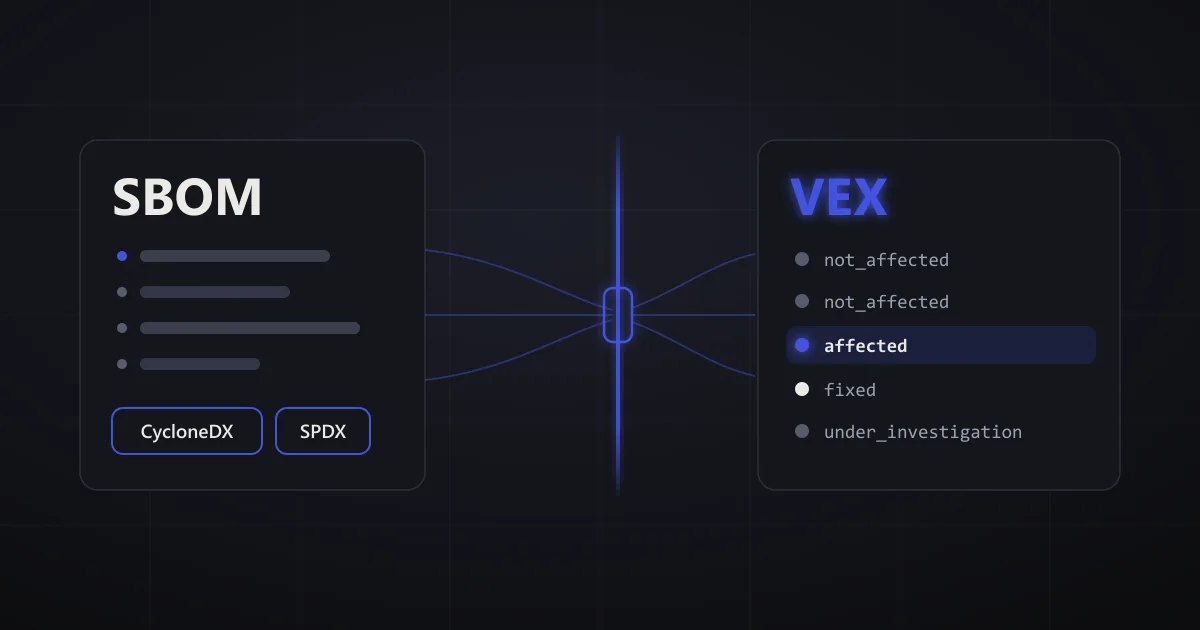
| Manufacturing / build | tampering with the build chain or injection through a third-party component | hardened pipeline, up-to-date SBOM inventory, provenance attestation |
| Deployment / update | misuse of the distribution channel to push an unvalidated binary | artifact signing, dual validation of releases, verification at install time |
| Fleet administration | mass action triggered from an administration console | second-administrator approval, immutable logging, alerting on high-impact operations |
| Decommissioning | uncontrolled wipe or reuse of hardware holding data | traced decommissioning procedure, inventory of media |
Not one of these lines is about the software embedded in your product. All of them nevertheless belong to the threat model the FDA expects in your submission.
The real lesson
The point is not that a large manufacturer worked badly — the company did contain the incident without its products being touched, which is not nothing. The point is where the breach opened: at the exact spot where corporate IT meets the chain that produces and maintains medical devices.
That is the point the frameworks describe least well, that notified bodies question least, and that teams document last. The catch-up is not enormous: a few matrix lines, a four-eyes control on irreversible operations, and strong authentication on the accounts that matter. You still have to have asked the question — and asking it early costs infinitely less than discovering it in a non-conformity letter.
FAQ
01Our devices are not connected: does this concern us?
Yes, and that is exactly the lesson. The incident passed through no device interface. It targeted the manufacturer’s administration infrastructure — which exists whether your products are connected or not, as soon as you develop software, manage endpoints and push updates, even by USB stick or by a technician’s visit.
02Should internal IT be documented in the regulatory file?
Not internal IT as a whole, no. What falls in scope is what touches the device life cycle: development and build environments, the update channel, quality system tooling in the ISO 13485 sense. The FDA guidance explicitly names supply chain, manufacturing, deployment, maintenance and decommissioning among the areas to model.
03Where do we start if our threat model stops at the product?
With a single question put to your team: which operations, here, are irreversible and executable by one person alone? Fleet wipe, publishing an update, deleting a repository, rotating keys. Each one gives you a matrix line, and most are handled by a dual validation rather than a technical project. It is the best effort-to-risk ratio in the whole subject.
References & standards cited
- [01] TechCrunch — CISA urges companies to secure Microsoft Intune systems after hackers mass-wipe Stryker devices (19 March 2026)
- [02] Cybersecurity Dive — Stryker attack raises concerns about role of device management tool
- [03] FDA Guidance — Cybersecurity in Medical Devices: Quality System Considerations and Content of Premarket Submissions (27 September 2023)
- [04] FD&C Act, section 524B — Ensuring Cybersecurity of Devices
- [05] Regulation (EU) 2017/745 on medical devices (MDR), Annex I, requirements 17.2 and 17.4
- [06] IEC 81001-5-1:2021 — Health software — Security — Activities in the product life cycle
- [07] ISO 13485:2016 — Medical devices — Quality management systems